
Safety
Earthquake safety
Clear actions without the clutter—during shaking, after an event and when a tsunami may threaten.
- During shaking
- After the event
- Outdoors
- Near the coast
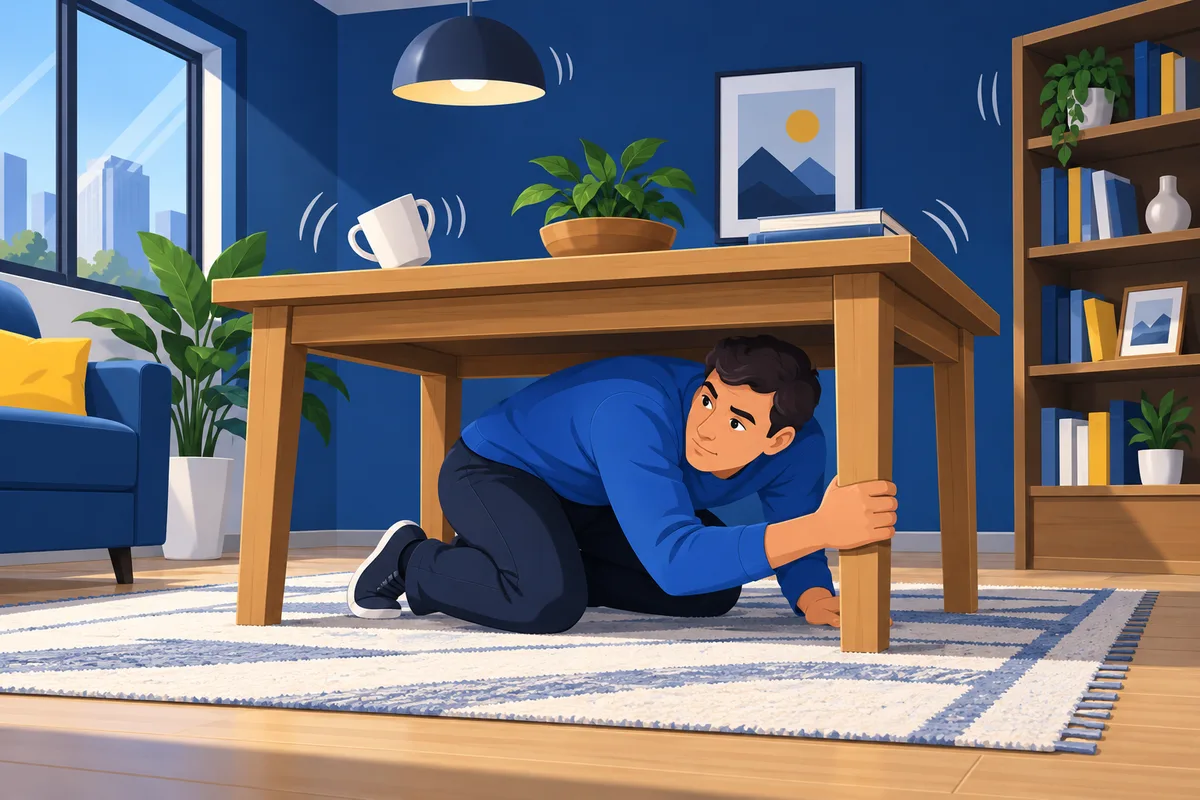
During an earthquake
If you are indoors, drop, cover and hold on. Move under sturdy furniture or beside an interior wall and protect your head and neck. Do not run for an exit during strong shaking and do not use elevators.
- Stay away from windows, glass and heavy objects that could fall.
- If you are in bed, stay there and protect your head with a pillow unless nearby objects present a hazard.
- Do not rely on a doorway; in modern buildings it is usually no safer than other locations.
If you are outdoors
Move to an open area away from buildings, façades, trees, bridges and power lines. Stay there until the shaking stops. If driving, stop in a safe location away from bridges and wires and remain inside the vehicle.
After the shaking
Expect aftershocks. Check yourself and others first, then assess the surroundings.
- Do not enter damaged buildings.
- Avoid downed wires, fire and possible gas leaks.
- Prefer text messages if phone networks are overloaded.
- Follow information from official local authority channels.
- Stay outside hazard areas until officials say it is safe to return.
If you are near the coast
Strong or prolonged shaking, a loud ocean roar, or a sudden rise or fall in sea level can be natural tsunami warnings. Do not wait for an app notification: once shaking stops, move quickly to higher ground or inland along a marked evacuation route.


This guidance is informational. In an emergency, follow instructions from local emergency authorities.